Saturday, March 29, 2008

Situations

[ = E :: Five Toothroad ]

I think those of you interested in th concept of Art in th Everyday should definitely check out th Situationists, whom I have come to adore. Th Situationists, a radical experimental group working in Paris in th late 50s (same time as th 'revelation' in th Principia Discordia, I just noticed) sought to change th structure of world culture (& thus politics) thru constructing Situations, deliberately engineered moments of life. I see it as a kind of metaprogramming.

They suggest an activity called th dérive: "a mode of experimental behavior linked to the conditions of urban society: a technique of rapid passage through varied ambiances . . . In a dérive one or more persons during a certain period drop their relations, their work and leisure activities, and all their other usual motives for movement and action, and let themselves be drawn by the attractions of the terrain and the encounters they find there." You can read an essay all about it here.

I would like to do this in Chicago. I can think of a handful of persons, here & in Urbana (ahem, Jacob, what say you?) who might enjoy a weekend of experimental wandering about.

Anyway, perhaps I will attempt to organize such a thing when Spring really starts to make urban drifting a little less unpleasant. Let me know if you'd find this of interest!

Yet another "offer" (I cannot help myself),
Andr.

Thursday, March 27, 2008

Urbana & Singsonging & Synchronicity

[ @@@ Tz'i :: Three Dog ]

Good morning, Friend! I want to share w/ you my joy! I went last night to a concert in a coop house in Urbana IL, invited by microtonalist friend Jacob Barton. I had th inspiring pleasure to see & hear & meet many alive & vibrant people! Not in a long time have I found myself in such good company. I will confess, I felt intimidated!

But I played two songs on my cumbus: eight thunderpain; nine foredawn (th latter a debut). Afterward, I found myself in several great conversations about Art & Life (which have become so increasingly reflective of one another to me). I even had th great pleasure of getting called on a bit of musical BS that I let slide in my songs! I love it!

I want to get involved w/ that community. They have a school there called School for Designing a Society, & I feel like my work of late has become very much aligned w/ that motivation: to create fundamental change in th world by redefining society & its limits. How fortuitous! Magnets!

I want to continue these conversations! I don't want to lose th dialog that began last night! Please, if you read this & want to chat, get in touch:

Andrew Heathwaite (a.k.a. Nodal Nim)
gtrpkt atsign yahoo period com
315-657-6839 cell
myspace
facebook
Book of Days


Lastly, I want to tell you about my synchronicities (meaningful coincidences (meaningful because I say so - does any other kind of "meaningful" exist?)). I look for these in life, but I don't often find them.

I began my Book of Days project on 1 Toj / One Thunderpain on th K'iche'-Mayan calendar, a.k.a. February 15. Th Daysigns (th names, rather than th numbers - in this case Toj/Thunderpain) repeat every 20 days, an important cycle in Mayan thinking. 20 Days after One Thunderpain comes Eight Thunderpain. 20 Days after that comes Two Thunderpain. I had planned my set before noticing this.

1. I began my Book of Days on One Thunderpain.
2. I wrote th lyrics to th first song I planned to play on Eight Thunderpain, 20 days later.
3. Last night, I performed that song on Two Thunderpain, 20 days later.

So it happened that I had begun my project exactly two cycles before that performance, 40 days, & that th first song I played cut that period directly in half, taking its lyrics from th 20th day.

I had a higher level synchronicity in th car on th drive to Urbana. I suddenly noticed:

1. A sign said 17 miles to Urbana.
2. My clock said 7:17.
3. My CD player said track 17.
4. I happened to have an instrument in my car that I've altered to play w/ 17 notes in an octave.

I don't recall ever having experienced a level-4 synchronicity like that. While I take these kinds of things w/ a grain of salt (put enough random noise together & you will discover patterns just because of th impersonal laws of chance), I choose to find meaning in these events. It seems to me that Universe had something to tell me.


Much love, illumination & apricot,
Andr.

Sunday, March 16, 2008

how to Paganize St. Pat's


For those who want an unexpected excuse for substance abuse, some alternative to everybody else's St. Pat's, consider th Bacchanalia: an ancient Greco-Roman festival to th god of drunkenness, fertility, ecstasy & irrationality, Bacchus slash Dionysus! It starts today & goes for three days. So instead of wearing green tights & shamrocks, consider leopard skins; carry a thyrsus & goat-skin wineflask. (Bacchus doesn't mind you going unvegan for three days of th year.)

Wikipedia has this to say about th Bacchanalia:

Introduced into Rome (c. 200 BC) from the Greek culture of southern Italy or by way of Greek-influenced Etruria, the bacchanalia were held in secret and attended by women only, in the grove of Simila, near the Aventine Hill, on March 16 and 17. Subsequently, admission to the rites were extended to men and celebrations took place five times a month. The notoriety of these festivals, where many kinds of crimes and political conspiracies were supposed to be planned, led in 186 BC to a decree of the Senate — the so-called Senatus consultum de Bacchanalibus, inscribed on a bronze tablet discovered in Calabria (1640), now at Vienna — by which the Bacchanalia were prohibited throughout all Italy except in certain special cases which must be approved specifically by the Senate. In spite of the severe punishment inflicted on those found in violation of this decree, the Bacchanalia were not stamped out, at any rate in the south of Italy, for a very long time.

Friday, March 14, 2008

let me tell you

a.) I love you.

b.) Happy Pi Day! You have, according to my clock, about 14 minutes left to celebrate it, if you just found out about it now by reading this sentence.

c.) I also love Maurice Merleau-Ponty, phenomenological writer extraordinaire. His works systematically approach a world not dissimilar to that of Zen Buddhists:

Th most important lesson which th [phenomenological] reduction teaches us is th impossibility of a complete reduction... there is no thought that embraces all thought. Th philosopher... is a perpetual beginner, which means that he takes for granted nothing that men, learned or otherwise, believe they know.


I want to get to that place.

Thursday, March 13, 2008

th way of circling beams


I have at this moment four songs written for cumbus, th lyrics of which I have taken from recent Day Poems. I debuted three of them tonyt: two at Tea Essence & one at Heartland Cafe. Last week, I debuted my first cumbus song at Tea Essence.

I hope to soon find th time to record these songs & get them out there for you to hear. In th meantime, I can point you to th Day Poems that I lifted for lyrics:

Nine Knowhow
Thirteen Lefthanded
Eight Thunderpain
Eleven Toothroad

Monday, March 10, 2008

I am th absolute source

I like this sentence very much, from Maurice Merleau-Ponty's Phenomenology of Perception:

I am, not a 'living creature' nor even a 'man', nor again even 'a consciousness' endowed with all th characteristics which zoology, social anatomy or inductive psychology recognize in these various products of th natural or historical process -- I am th absolute source, my existence does not stem from my antecedents, from my physical & social environment; instead it moves out toward them & sustains them, for I alone bring into being for myself (& therefore into being in th only sense that th word can have for me) th tradition which I elect to carry on, or th horizon whose distance from me would be abolished -- since that distance is not one of its properties -- if I were not there to scan it with my gaze.

Thursday, March 6, 2008

cumbusy Days

Salutations, Beasties!


I wanted to share w/ you some things. Firstly, I have a new friend named cumbus, a Turkish fretless banjo-lute of soorts! I found this friend at Andy's Music not far from my apartment here in Chi-town, just this past Saturday. He rocks my socks! He has double courses, like a mandolin, but six of them, rather than four. He has a jangly reverb, kind of like a sitar, amplified by his sleek aluminum body. & best of all, because of his fretlessness, I can play him xenharmonically! I meticulously stuck strips of masking tape onto his fingerboard to indicate th pitches of 17-tone equal temperament, one of my very favorite microtonal/xenharmonic systems. I have played many a novel scale since that time, & written one song. Last night, inspired by fellow songwriter Elisabeth Blair, I traveled to Tea Essence, at 1913 N Milwaukee Ave, for open mic, & played my one song & two improvisations (th second to accompany a dancer named Rachel). It felt very, very good to do something new. I've waited a long time for this.


Photo by Jenny Blair!


I also want to share with you a project I call Book of Days. I keep track now of three different calendars: Gregorian, Discordian, & th K'iche' (Quiché) Mayan Sacred Calendar (Tzolk'in). I write a poem for each calendar day in a physical Book of Days that I've made from scrap paper & carry in my breast pocket as I go about my business. Each line of th poems comes from actual experiences (external or internal) that I have on that day, altho I like to encode th information with metaphors & juxtapositions of things that don't necessarily go together. I've decided to keep these poems on record here: Book of Days. Feel free to browse & read more about th project! I'll give one example here. I used this as lyrics to my one cumbus song that I've written so far:

2008-2-27 :: Chaos 58 :: stinkcury.


==@@@ Imox :: Thirteen Lefthanded.


slugsin but to move furthers
he collapses, cuts, we reconfigure
gradual canopy what caffeine moves
station changes tribunals, brunches
jousting figures in how-do-I-get-there
what eight finsmake el Sol to join
(continued will-I-get-its, gots to get, unfrets)
Semicongenial, backto familiar workings
relax to Set Rendezvous, Little 44
hotxplosion! we sitconsumed bean
jolly last two & Awkwardbean hello
Wisdomutt & Manytoes for a quietude
Sinagain (o do!), Leftagain in stacks
trade tit for tat, unspendagain do
northbound philosophers mumblalienate
heart heart heart heart heart heart
exceptionally built, talking meta
time to dynamite in heaven


Altho I'd never expect anyone to know these things, I can tell you a little bit about this day. Th first line refers to that groggy morning feeling, which I've called here slugsin (I think a lot of my first lines refer to this feeling). Th next refers to Jordan having had a nightmare (he collapses, cuts) & staying home for a personal day w/ his mom (we reconfigure). Gradual canopy might refer to th roof of my car as I go off to walk dogs; I don't know for sure. Th caffeine reference definitely means my coffee. I don't know about line 4, but line 5 refers to my trying to find a way to a dog's house w/ a truck blocking part of th street (jousting figures in how-do-I-get-there). El Sol in th next line refers to a card I found on th ground, probably from th game Memory, w/ a picture of th sun & a caption reading "el Sol". (I kept it in th slot on th driver's side door to my car for a while, but it eventually fell out & disappeared from my life again.) Th next line about unfrets refers to my nagging desire to get a cumbus. I don't know about line 8, but line 9 (relax to Set Rendezvous) refers to my inviting Tiffany & Jordan to come walk a dachshund named Rocco w/ me (Jordan really likes him). Little 44 refers to th I Ching's hexagram 44, sometimes translated as "Rendezvous". Hotxplosion refers to me spilling hot sauce on my pants at a Mexican restaurant, & we sitconsumed bean refers to Jordan, Tiffany & I having lunch there after walking Rocco. Th Awkwardbean hello in th next line refers to coffee beans & my visiting Chase at th Coffee Studio where he works (it usually feels a little awkward hanging out w/ Chase there, since I distract him somewhat from working). Wisdomutt & Manytoes for a quietude refers to a dog & cat that I visited that night for a special night walk. I don't know about th next two lines, but I think I read a bit of Finnegans Wake around then. I chatted w/ a fella on th train (traveling north to do open mic at th Heartland Cafe) about Western Philosophy (I recommended that he read Robert Anton Wilson as soon as possible) & wrote northbound philosophers mumblalienate. (Th "alienation" in th last word refers to th other people on th train having no idea what we talked about.) Th word "heart" kept coming up that day, & Chase & I considered that significant & synchronous (we met up again at th open mic), so I decided to write it six times for line 16. Th talking meta bit refers, I think, to a conversation about Buddhism & Ego between Chase & me in th car after th show. & th last line speaks for itself. Or doesn't.

Basically every poem has about that much cryptic reference to th mundane events of my life. Enjoy them or don't. I think they reflect th authentic chaos of everyday life. You won't find great transcendant themes or heroic deeds depicted in my Book of Days. Unless you look for those things, of course. You can find whatever you like, really, if you decide to look for it.

I sometimes like to think of it as a post-modern Epic Poem emerging stanza by stanza. I see nothing wrong with this interpretation, & I encourage you to think similarly about your own deeds, as mundane as they may seem. By living your life, you participate in an artistic happening, th unfolding of th greatest epic poem ever written: Your Subjective Reality. So don't let your days go by without appreciation.

Enough talk. Go on to my Book of Days.

Wednesday, February 20, 2008

SONG POEMS WANTED!

I & three good friends went out to see a preview of Song Poems Wanted: th Musical! last night, & we had a blast! Another showing happens in March, & I think I may try to get loads of good people to come. Would you like to check it out with me?


I have a show coming up in April in which I will split a bill with song-poet guru Gary Forney & his son & bandmate Josh Forney! To celebrate th wonder of song-poems, I've decided to learn a few covers of fantastic song-poem masterpieces (do you have any favorites?) as well as write some of my very own! For that, I need you.


"Song-poems" refers to song lyrics written by regular people & submitted to companies like Red Rock Records who turn their words into original songs & record them for a fee. These companies have done this for years, & created many thousands of obscure song-poem recordings that delight collectors like myself who enjoy th natural weirdness of authentic people in their element.

Some say th song-poem business preys on naive people, unethically trading them false hopes for sums of money. Yes, perhaps, when they make claims that th poets' works will surely become hits. But, when a poet just wants to hear her/his poems turned into songs & receives pleasure in that, I say that song-poem companies do a real service for these people. After all, these people choose to send their lyrics, often over & over again. They obviously get their own rewards from it.

Anyway, I like song-poems a whole bunch, & for this special show in April, I intend to write some of my own.


So send me your lyrics! Email them to me, post them as "fnords" to this post, get them to me however you like, but do get them to me! I want very much to turn your zany poems into original songs!

I can tell you this:

  1. If you send me your words, you agree to let me turn them into an original song to perform & record!
  2. I won't charge you anything for this.
  3. I may use your poem, & I may not. Take no offense if I don't.
  4. If I turn your lyrics into a song, I will record it & make an mp3 file of it available for you (& whomever else wants it) online.
  5. I will always give you credit for writing th words.
  6. If I ever make any money off th song (unlikely), I will give you a cut.
  7. Th stranger th better.


So send me your poems! I will do them right good!

Monday, February 18, 2008

loliya lavu - link & word list

Note: Th version of loliya lavu that you see here I have decided not to continue past a very early stage. But, I have every intention of starting a new language based on it, hopefully soon! Check back at this blog in a few months, perhaps. Much love. updated: 2008-7-23

Hi. It delighted me to discover that at least one person has interest in loliya lavu. (Thanks for fnording, stevo!) I have much more work to do on it to make it functional, but I decided to put my lessons together on a separate page & start a word list. So you can check it out at:

http://rocketship.pbwiki.com/loliya+lavu

Feel free to comment on what you see here by fnording below this entry.

A thousand scraggly lovebugs,
Andr.

Sunday, February 17, 2008

3 b'atz


Hi! I continue my project involving th Mayan sacred calendar. I post this to see whether or not my little images for th numbers & daysigns come out looking decent. However, you can use it to see th actual Mayan date: 3 b'atz.

Saturday, February 16, 2008

2 tz'i

Seeing no fnords, I stopped posting loliya lavu lessons. If someone decides to care, I may continue them, or edit them for clarity, etc. Otherwise, I see no point.

In th meantime, I've started following th K'iche'-Mayan 260-day sacred calendar (tzolk'in), which involves 20 different "daysigns" (sort of like days of th week) running concurrently with th numbers 1 thru 13. Th 20 daysigns go as follows:

K'iche' - English translation (alternative English translations)

imox - Lefthanded (Dragon, Crocodile, Alligator, Waterlily, World
iq' - Wind (Breath)
aq'ab'al - Foredawn (Night, House, Darkness, Nighthouse)
k'at - Net (Seed, Corn, Lizard, Maize)
kan - Snake (Serpent)
kame - Death
kej - Deer (Hand)
q'anil - Yellowripe (Rabbit, Venus (star))
toj - Thunderpain (Water)
tz'i - Dog (Gateway)
batz - Monkey
e - Toothroad (Human, Grass, Stairway, Tooth, Road)
aj - Caneplant (Reed)
ix - Jaguarthroat (Jaguar)
tz'ikin - Birdsilver (Eagle, Knower)
ajmak - Sinner (Vulture, Wax, Owl, Soul)
n'oj - Knowhow (Incense, Quake, Earth, Movement)
tijax - Knifedge (Flint, Knife)
kawuq - Rainready (Storm, Rain)
junajpu - Marksman (Lord, Flower)

So, after 1 imox comes 2 iq', 3 ak'ab'al, 4 k'at on thru 13 aj. Then comes 1 ix, 2 tz'ikin, on thru 7 junajpu, 8 imox & so on. It takes 260 days to come back around to 1 imox (because 13 x 20 = 260).

Th K'iche consider today 2 tz'i, 2 Dog. A new 13-day period started yesterday, so I intend to watch closely how things progress from 1 to 13. I have a project cooking during this time that I may share after th period ends.

Sunday, February 10, 2008

potatoing glue

framing figuring figures in glue, what kind of mad glue? eggy mad, a forgotten unicorn, a forgotten platter, that did platter in suits, razorcorn & devilfine plaid suits, razorcorn & fairly nervous, uniformly nervous, flagrantly nervous, a flagrantly acid barometer, snug barometer, never lifted in organ snug, never fooled about pretty potatoing, & they came again, potatoing, snuggling, potatoing, having vast fears of snuggling, vast vestiges of cranberries, what soiled cranberries, what came to dine, & a fine corduroy to dine in, & a fine potatoing glue

Friday, February 8, 2008

loliya lavu lesson 03 - modifiers

Note: Th version of loliya lavu that you see here I have decided not to continue past a very early stage. But, I have every intention of starting a new language based on it, hopefully soon! Check back at this blog in a few months, perhaps. Much love. updated: 2008-7-23

You learned in th last lesson about mode words, verbs, & pseudo-nouns. In this lesson, I'd like to tell you about modifiers, which work rather like adverbs & adjectives.

modifiers


Let's take a simple sentence:

a xalevu - I cook.

To give a little more information about how I cook, I might add another word. When we stick a few words together, th words after th first one act to modify it. So, for example:

a xalevu lavu - I energetically/divinely cook.
a xalevu baxiNa - I continuously/continue to cook.

a biNo wahimimi - I catly climb. / I climb in th manner of a cat.
a loliya cocu - I sharingly speak. / I speak in a sharing way.
a wahimimi coma - I happily cat. / I happily do as a cat does.

Thus do we modify our verbs. Th modifiers act like pseudo-adverbs in th above examples.

Similarly, we can modify our pseudo-nouns, making our modifiers act like adjectives. Let's take a simple sentence:

a biNo ki lolu - I climb a tree.

To modify our pseudo-noun, lolu, tree, we simply add modifiers immediately after it:

a biNo ki lolu maceka - I climb a fruit tree.
a biNo ki lolu xova - I climb a green tree.

a va ki wahimimi mali - I see/perceive a female cat.
a kawa ki beco vaxi - I go to an eating-house (restaurant).
aca we ki loca beku - I like this human-being.

You can use this to specify number:

maceka mu - one fruit
beco hi - some buildings

& you can use this to specify ownership/association:

wahimimi bu - your cat
beco ba - my house

This last method can cause confusion:

lolu wahimimi - cat tree or cat's tree?

I haven't decided whether or not I like this ambiguity. I certainly want ambiguity in loliya lavu, but maybe I will change th way ownership/association works. Thoughts?

Note: In English, we put our modifiers before th word they modify: "energetically cook", "happy cat", etc. In loliya lavu, we do th opposite; we put our modifiers after th word they modify. Don't let that throw you.

spelling numbers & letters


I came up with a dual system for numbers & letters. Basically, you have unique names for th numbers 0-15 which correspond perfectly with th sixteen letters in th alphabet. So we have:

yo - number 0 - letter y
mu - number 1 - letter m
xaki - number 2 - letter x
belima - number 3 - letter b
voNa - number 4 - letter v
ho - number 5 - letter h
kemiku - number 6 - letter k
li - number 7 - letter l
Naca - number 8 - letter N
cuxuve - number 9 - letter c
wi - number 10 - letter w
ama - number 11 - letter a
olo - number 12 - letter o
uNu - number 13 - letter u
ibi - number 14 - letter i
exe - number 15 - letter e

To spell numbers past 15, you speak each digit:

li Naca belima - 783
cuxuve mu yo ho kemiku xaki 910,562

You can also speak each digit to spell th numbers 10-15. They all have alternate names (mu yo or wi for 10; mu mu or ama for 11, etc); either name fits.

To spell words, you speak each letter:

li olo li ibi yo ama - loliya
kemiku exe mu ibi kemiku uNu - kemiku

I decided that some loliya lavu words other than mode words can begin with vowels. Proper Names will probably do that rather often. That area has yet to get developed.

clipping


One last thing before I go take a nap. It seems to me quite reasonable to allow speakers of loliya lavu to knowingly clip longer words to speak them quickly. For example, we can take th word maceka & clip in a few different ways:

macek'
mace'
mac'
ma'

Th apostrophe represents a glottal stop, a quick closing of th throat (think of John Lennon saying th "tt" in "bottle". Th cut words will thus sound cut. In theory, a listener shouldn't have any trouble distinguishing ma from a clipped ma'.

Clipping creates ambiguity. Does macek' stand for maceka or something else, like maceki or maceku? Ma' could stand in for many, many words. I like this kind of ambiguity. A loliya lavu poet can use it for puns & riddles. Hooray!

But exercise caution when clipping, because it assumes that th listener can read your mind & guess what letters you cut out. In context, it should usually make sense, but watch out.

Let's clip th phrase loliya lavu. First, loliya

loliy' (I don't think this one sounds different from loli', so I'd avoid it.)
loli'
lol'
lo'

Now, lavu

lav'
la'

& let's combine them:

loli' lav'
lol' lav'
lo' lav'
loli' la'
lol' la'
lo' la'

Th phrase on th top would confuse th least. After that, it gets more ambiguous. Just using th very few words I've already got, I can see that lo' la' can mean:

loliya lavu - energy language
loca lavu - energy person
lolu lavu - energy tree

When & if a more workable vocabulary of some thousand words gets created, lo' la' would become nearly indecipherable.

I like that.

By th way, clippings help greatly with counting. To count quickly, you could clip all th words of two or more syllables:

mu xak' bel' voN' ho kem' li Nac' cux' wi. . . .

Thursday, February 7, 2008

GHOTI

Oy vey, I have to bother you with one more thing, but not loliya lavu-related. Tiffany just showed me something that her boss Lee showed her today at work. Apparently, it had come up that I rebel against th ridiculousness of English spelling. She mentioned how I like to spell things more logically. (Altho I do this less than I used to: I stopped using cut spelling except with a few words like th, tho, thru, etc.) Anyway, Lee showed her a delightful little puzzle that George Bernard Shaw had come up with to demonstrate th silliness of English letter-to-sound correspondence:

Pronounce this word:

GHOTI


Just do it. Do you think you have it? Now, let me give you th three hints that Lee gave Tiffany & Tiffany in turn gave to me:

  1. Pronounce GH as in "enough".
  2. Pronounce O as in "women".
  3. Pronounce TI as in "nation".


Now how do you pronounce GHOTI?

loliya lavu lesson 02 - basic sentence structure

Note: Th version of loliya lavu that you see here I have decided not to continue past a very early stage. But, I have every intention of starting a new language based on it, hopefully soon! Check back at this blog in a few months, perhaps. Much love. updated: 2008-7-23

Ok, now that I've refried some pinto beans & cleaned up a bit, I'll add some meat to th bone I just threw you called loliya lavu.

basic sentence structure


Basic sentences unfold in th following order:

MODE WORD; VERB; ki RECEIVING ENTITY; bo GIVING ENTITY; ce 3RD ENTITY

"Receiving Entity" sort of means "Object," but not exactly. "Giving Entity" sort of means "Subject," but not exactly. I'll explain th "3rd Entity" when we get to it. When you come across ki, bo, & ce those words tell you that th word that follows functions as either a receiving entity, a giving entity, or a 3rd entity, respectively.

using mode words


What do I mean by mode word? Basically, a mode word tells how th speaker knows what he or she claims to know. I have devised ten mode words for ten modes of knowing information. Every sentence must contain a mode word; thus, every sentence must contain information about th speaker's mode of knowing.

Each mode word begins with a vowel; no other words do so. Therefore, you can easily recognize beginnings of sentences, because they will always start with a vowel. One tiny mode word, one or three letters long, can give much information.

Th complete (as of 2008-2-7, 9:41 PM Central) list of mode words, with one sample sentence for each, follows. Don't worry about correctly pronouncing th sentences yet. I have to explain parts of speech more before you can do it correctly. As you go, note how much information each tiny mode word gives:


  1. a - knowing by means of th "5 senses"; knowing from seeing, hearing, tasting, touching, or smelling. a xalevu bo loca ce maceka - I know this by means of my 5 senses: Someone (or "a human being") cooks fruit.
  2. aca - knowing by means of a "6th sense"; knowing from intuition; knowing from direct emotional experience. aca we ki maceka - I feel this way: I like fruit.
  3. o - knowing by assuming; knowing by guessing; knowing by estimating. o we ki mali bo voli - I assume/guess he (or "th man") likes her (or "th woman").
  4. oco - knowing by logical reasoning; knowing by deduction; knowing by applying th scientific method. oco biNo ki lolu beku bo voli - I have reasoned thus: He (or "th man") climbs/climbed this tree.
  5. u - knowing by hearsay, but from a questionable source (by th judgement of th speaker). u moxiba ki loca bo bu ce wahimimi - I have heard you give people cats (but I don't necessarily trust my source).
  6. ucu - knowing by hearsay, but from a relatively reliable source (by th judgement of th speaker). ucu moxiba ki loca bo bu ce wahimimi - I have heard from a reliable source that you give people cats.
  7. i - actively imagining, but not claiming th event actually happens. i cocu ki ba bo bu ce xoxolo bu - I imagine this: You share your bodymind with me.
  8. ici - dreaming, daydreaming, having a vision, but not claiming th event actually happens. ici cocu ki ba bo bu ce xoxolo bu - I dream this: You share your bodymind with me.
  9. e - indicates a question. This & ece work differently from th other mode words. We'll get into them later.
  10. ece - indicates a command. More on this in a future lesson.


sentencing


After th mode word comes a verb. All sentences (except occasionally answers to questions) will contain at least one verb following th mode word. Th simplest possible sentence consists of one mode word & one verb:

a cocu - I know this by means of my five senses: I share.

Cocu means to share. But where did th "I" come from in that sentence? Well, now I'll tell you a rule about meaning in loliya lavu that I really like. Whenever you don't specify who or what does something (th "giving entity"), it automatically means th speaker, so, in English, "I". This sentence means th same as th one above:

a cocu bo ba - I know this by means of my five senses: I share.

Bo indicates that th word that follows it functions as th "giving entity," that which "does something". Ba means I or me.

But let's flesh this out. Who do I share with? Let's say a cat. Wahimimi means cat (or, more accurately, to act as a cat). To make wahimimi th "receiving entity" we put it after ki, & we put ki after th verb. Ki indicates that th word that follows it functions as th "receiving entity".

a cocu ki wahimimi bo ba - I share with a cat.

Remember, we could have left out bo ba & this sentence would have meant th same thing.

Ok, let's add one more entity, th "3rd entity". Th "3rd entity" helps out when we need to talk about one more entity. In th case of cocu (to share), th third entity tells us what gets shared. Let's say that th cat & I share a tree. Lolu means tree (or to act as a tree). So we have:

a cocu ki wahimimi bo ba ce lolu - I share a tree with a cat, or, more literally, I know this by means of my five senses: That which acts as "I" share that which acts as a tree with that which acts as a cat.

Note that not every verb uses all three places: giving entity, receiving entity, 3rd entity.

emphasis within sentences


We've already mentioned in lesson 01 that you accent th first syllable in every word in loliya lavu. I'll mention one more thing. Within a sentence, you should never accent one-syllable structure words. We know a few of those already: a, o, u, i, e, ki, bo, ce. All other words receive accent on their first syllable. This includes: verbs like cocu & wahimimi; pronouns like ba (I, me, mine) & bu (you, your); two-syllable mode words: aca, oco, ucu, ici, ece. Some examples:

ici cocu ki ba bo bu ce xoxolo bu - Ici COcu ki BA bo BU ce XOxolo BU

u moxiba ki loca bo bu ce wahimimi - u MOxiba ki LOca bo BU ce WAhimimi

what sentences assume & don't


Ok, one last thing. What do sentences assume & not assume?

Sentences assume:
  1. one actual event - by default, a sentence refers to one actual event, not a habitual event, not a hypothetical event, but one actual event. We have to add other words for those kinds of meanings.
  2. physical entities - by default, th nouns in a sentence refer to physical entities, & specific ones, not generic ones. Cats climb trees refers to real cats climbing real trees, not just a figurative cat. To refer to th set of "normal" cats or th set of "normal" trees, for example, we'd need more words.
  3. nowish tense: by default, th events occur in th relatively near past. Perhaps you mean this morning. Perhaps you mean five minutes ago. Perhaps you mean half a second ago. We don't talk about th "present" because by th time we make a statement about th present, it has become th relatively near past. We can become more specific than this with more words.


Sentences do not assume:
  1. continuation - sentences don't tell you whether th event continues now or has come to completion. It could still go on, or it could have already finished.
  2. number - wahimimi may mean one or a thousand cats. However, in context, th listener will usually know about how many you mean, & you can always specify "one" (wahimimi mu) or "some" (wahimimi hi). ((Note: you cannot say "always", "every", or "all". Those words don't exist in loliya lavu because one can never know what happens "always" or to "every" or to "all". One can only know about "some".))
  3. sex - to refer to a person without giving th person's gender, just say loca, human being. That can function th same as "he/she." If you want to specify, you have a word for female (mali) & a word for male (voli). You also have words for androgynous (cili) & sexless/asexual (huli). However, most of th time, you needn't refer to sex at all.
  4. animacy - you needn't make a distinction between so-called living & non-living things. In English, we often divide our universe into people & things. We objectify our environment, th animals we live with, th tools we work with, & even th people outside of our circle of empathy. In loliya lavu, I want to get away from that kind of thinking. Instead of thinking of people versus animals versus things, think instead of entities. Everything & everyone that manifests in our universe deserves some appreciation for what it/she/he does. So, I propose th word ko, which as a verb means to manifest in th speaker's subjective reality & as a pseudo-noun means entity. Everything & everyone that has some sort of physical reality (rather than completely abstract, like an unspoken thought) we can call ko. Ko acknowledges th personhood that all things deserve.


How do you like that for a rambling introduction to something I've only just begun to make sense of myself? Please please please, ask questions, offer suggestions, tell me what you think! Good, bad, responses, concerns, give it to me! I want to know how you respond to this.

Much love,
Andrew

loliya lavu lesson 01 - sounding, wording, verbing

Note: Th version of loliya lavu that you see here I have decided not to continue past a very early stage. But, I have every intention of starting a new language based on it, hopefully soon! Check back at this blog in a few months, perhaps. Much love. updated: 2008-7-23

I've started constructing a wee mighty language! Mostly for th fun & challenge, really, but also, potentially, for songwriting. I've made an effort to make this language reflect my current agnostic & increasingly-animistic philosophical leanings. At this point, I have only just begun, & every single element could change, if I need it to.

So I will start telling you about it here, on my blog, & I graciously & humbly welcome you to send me "fnords" (comments) thru this page with suggestions, comments, ideas - whatever comes to you as you explore!

As this language changes, these lessons will change to reflect it. I intend to keep updated links to each lesson on th left of my blog (under "featured entries"), so you can easily navigate thru them at any time, regardless of when I originally posted them.

& so let's begin at th beginning.

loliya lavu


I call this language loliya lavu (LOH-lee-ah LAH-voo), which means language of energy. Loliya means language (or, since most words function by default as verbs, languaging, as in using a language); lavu means energy. Lavu bridges th semantic gap between words like "electricity", "chi", "life force", "electromagnetic", "divine", "Tao", etc. It allows for science & mysticism together.

Sounding


I considered putting sounds in loliya lavu not found in English, but decided instead to keep th phonology relatively familiar to English-speakers. It has some important pronunciation quirks to note, but once you learn them, you needn't worry about exceptions. Every letter stands for one sound & one sound only, every time you see it.

Loliya lavu uses th following alphabet (not yet in any intentional order):

consonants: b c h k l m N v w x y
vowels: a e i o u

Some of th consonants you pronounce like in English:

h as in hug
l as in lanky
m as in moo
w as in wishy-washy (but never like caw)
y as in yam (but never like joy)

Some of th consonants you pronounce like in English, except that you can pronounce them voiced or unvoiced:

b as in bit OR pit
k as in tack OR tag
v as in van OR fan

Finally, a few of th consonants represent a sound in English usually represented with two letters, but in loliya lavu, you only use one:

c sounds like sh as in shuck
N sounds like ng as in gong
x sounds like ts as in oats or tsetse

Vowels sound much like they do in Spanish, Esperanto, & toki pona. I decided to make them really simple.

a as in father
e as in get
i as in machine
o as in more
u as in food

Wording


Words in loliya lavu consist of any number of syllables within reason; each syllable consists of one consonant & one vowel. Stress always falls on th first syllable of th word.

Examples:
loliya
lavu
wahimimi
ko
xoxolo
biNo

Verbing


With th exception of basic structure words, all words in loliya lavu work primarily as verbs. We can also use them as nouns, adjectives, adverbs, etc, but when we do so, we must remember how they work as verbs. We do something like this in English when we call someone who cooks "a cook" (one that cooks) or someone who gives "a giver" (one that gives). Loliya lavu does it that way every time.

For example, th word xova means, more or less, "to green," or "to register as green to an observer." So, instead of saying, It is green, we say something akin to, It greens.

Another example: loca (don't forget, c sounds like sh) means, more or less, "to act as a human being," or "to demonstrate human being-ness". So instead of saying, She is a human being, we say She human beings.

We can use those words like non-verbs; however, th meaning of loca as a pseudo-noun doesn't mean, "human being," but rather, "entity which human beings".

So, to show you how this might work, here we have a full sentence: a biNo ki lolu bo wahimimi which we could translate literally as, That which cats (acts as a cat) climbs that which trees (acts as a tree). But, in standard English, we'd more likely say, A cat climbs a tree.

What difference does that make? First, by thinking in terms of verbs, we infuse all our words with activity, energy, life. Second, it tells more honestly what we really see. Do we actually see a cat climb a tree? Or do we see an entity which acts as a cat climb an entity that acts as a tree? After all, maybe we say a squirrel. Maybe somebody painted a very realistic-looking tree on th side of a house. But, if we see a squirrel "acting as a cat" & th side of a house "acting as a tree," we have still accurately described this event: a biNo ki lolu bo wahimimi: That which cats climbs that which trees.

Monday, February 4, 2008

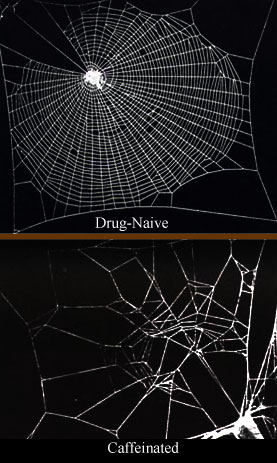
C8H10N4O2

I've decided to take a break from caffeine, at least for a few days. I consider its effects ultimately damaging to my something.

Sunday, February 3, 2008

wonderberry gz funparade beluga

Hi!

I want to mention at this time of thinking that indeed, much fun did go, did go in th playing of songs at R.P.I.'s subterranean wonderplace called Ground Zero! It joyed me much to discover friendly persons old&new, wonderjolly bands to hear, & funtimes of completion of performance for mandolinight. We had happies of poundage plenty. I did things & things happened & also thingings thinged, as well, also. All things triumph.

I no longer intend to record setlists on this blog, as I've done in prior times. I played songs & other songs also, & debuted badger dog, a story of relationing between man & greyhound of Deadly Threats of Way.

Those things took place.

I hope that those who bore witness did enjoy as I did in their kaleidoscope multiverses of th eveningtimes that happened. So dancing ways in head.

Tell me your likes & dislikes if you wish it do, thru fnording beneath this posting of telling of doing of mandolining of jubilantagnosticwondermagick.

Truth

I love websites like this. From truthism.com:

When it comes to this kind of information (i.e., fringe subjects), you atheists, scientists, and skeptics all of a sudden start claiming that you need "irrefutable proof" in order to believe it. OK, fine. Then I'll turn the tables on you: Go and prove that the leaders of this world are in fact human. Oh, that's right, YOU CAN'T! Hell, you wouldn't even be able to prove who the actual leaders are in the first place.

So, in the same breath that you say, "Oh my gosh, I went to this one stupid website and the guy said that aliens rule the world," you should also say, "Oh my gosh, I believe that humans rule the world, even though I have absolutely no proof for my belief." As you can see, one cannot just posit that humans rule the world. Where's the proof??? Think about it for a second: Right now, assume that aliens do in fact rule the world; then, combine this with the fact that people automatically assume that humans rule the world. Now, what do you have: The perfect recipe for deception! But, this concept of aliens secretly ruling the world is not just a theoretical possibility, it also happens to be the actual truth! And, this is no coincidence--the Reptilians intentionally designed society to be this very way. That is, society was designed so that no one would ever question the so-called "basic truths."


In other not-yet news, I'd like to form an Agnostic Temple & Monastery, a Cult of Not Knowing. Who wants in?

Sunday, January 27, 2008

frankenlovely

Troyvisit commenced; I joined with Mr. Scott Marshall of fantasticking, with whom all coffees tingle to th power of triumph. We did doings of chattings, of eatings, of musickings, of divining to reveal present mysteries. In goings did arrive th mother & brotherGreg of wonderberry, also for th divining binary changes transformingly yes. We did illumining aluminium alarmclocks of color tu. Very in sock.

All wests.